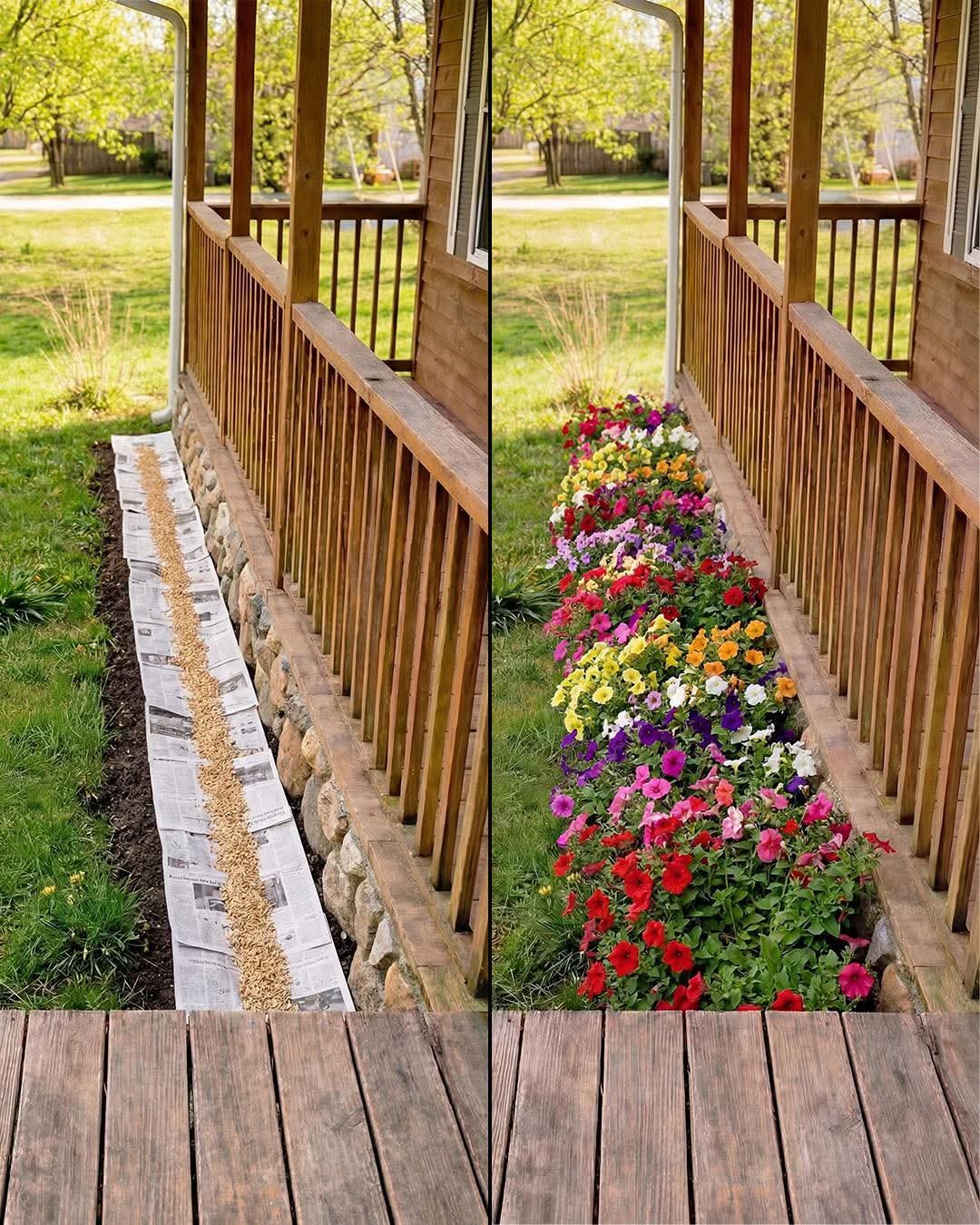
Step 1: Choose Your Flower Bed Area
Select a strip or bed that:
- Gets adequate sunlight
- Has grass or weeds you want to cover
- Is along a fence, porch, or walkway (this method is perfect for edges)
Step 2: Lay Down the Newspaper
- Place 4–6 layers of newspaper directly on the grass or soil
- Overlap edges so no gaps are left
- This blocks weeds completely
👉 Tip: Wet the newspaper lightly so it doesn’t blow away.
Step 3: Add a Thin Soil Layer
Spread 1–2 inches of garden soil or compost on top of the newspaper.
This anchors it down and gives seeds something to root into.
Step 4: Sprinkle the Seeds
Evenly scatter your flower seeds over the soil layer.
You can:
- Mix seeds for a wildflower look
- Or plant in loose rows for a more organized bed
Step 5: Cover the Seeds
Add another ½–1 inch of soil over the seeds—just enough to cover them lightly.
Step 6: Water Gently
Water thoroughly but gently so the seeds don’t wash away.
Keep the bed consistently moist for the first 1–2 weeks.
Step 7: Optional Mulch
Add a thin layer of mulch if needed to:
- Retain moisture
- Protect young seedlings
- Improve appearance
🌸 What Happens Next
- The newspaper slowly decomposes
- Weeds underneath die off naturally
- Seeds sprout and establish strong roots
- You get a full, vibrant flower bed with minimal maintenance
✅ Best Plants for This Method
- Petunias
- Pansies
- Zinnias
- Cosmos
- Alyssum
- Marigolds
- Wildflower mixes
Annual flowers work best because they grow fast and love loose soil.
🌿 Benefits at a Glance
✔ No digging
✔ No chemicals
✔ Excellent weed control
✔ Budget-friendly
✔ Eco-friendly
✔ Beautiful results
Final Thoughts
The Newspaper Seed-Layer Flower Bed Method proves that you don’t need expensive landscaping materials to get stunning results. With simple newspapers, seeds, and soil, you can transform a dull strip of ground into a burst of color that lasts all season.
Sometimes the smartest garden tricks are the simplest ones.